
While on a deep dive of the Indiana DNR’s urban land management web page I found Heartland Restoration Services right here in Fort Wayne. I’d hit the mother load of affordable native plants. Not only are they open to the public but they offer crazy good prices on locally sourced native plugs. This is a game changer for me. I was so excited that I just knew something was gonna go wrong. The plants were going to be terrible, they were going to tell me they only sold to businesses, something. Obviously none of that happened and there is so much to love about this company.
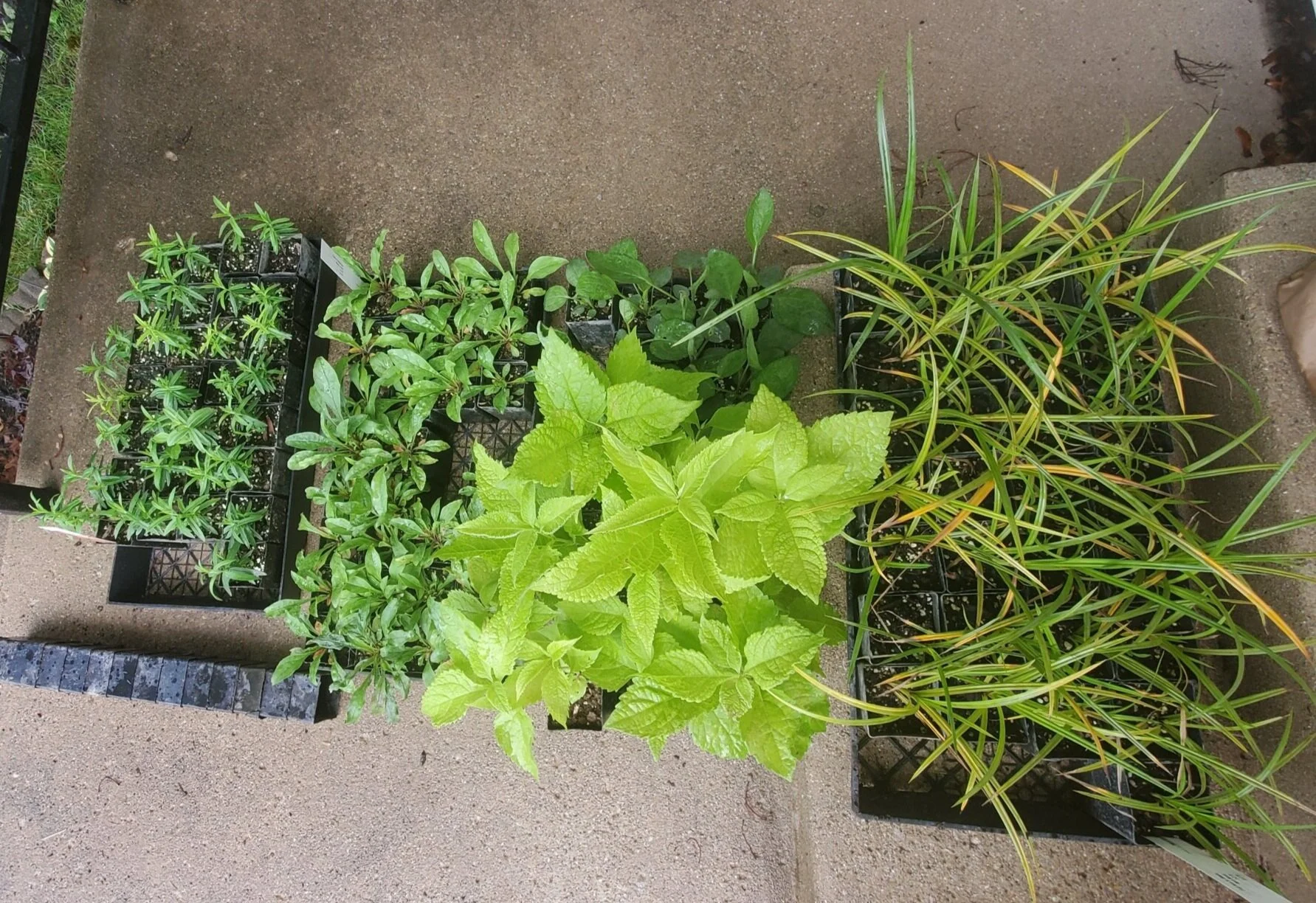
This is about 1/2 of my native plug order.
If you have a large area you need to plant, you’ll want to check them out. The only caveat is that you need to purchase a full tray of either 32 or 49. Within that tray you can have either one or two types of plants at their respective rates. So far, I’ve ordered the following for the orchard ($ Price Per Plug): cardinal flower($1.55), marsh milkweed ($1.75), great blue lobelia ($1.55), butterfly weed ($2.15), showy black eyed susan ($1.55), franks sedge ($1.35), hairy beardtongue ($1.35), wild columbine ($1.75) and purple joe pye weed ($1.55). In all I’ve invested $388.63 for 224 plugs. That’s incredible. Being able to buy plugs will give my plantings a jump start vs waiting on cold stratifying and growing from seeds. When you’re done with the plug pots you can either reuse/recycle them (I’m reusing them to grow milkweed next year) or you can return them to Heartland for reuse.
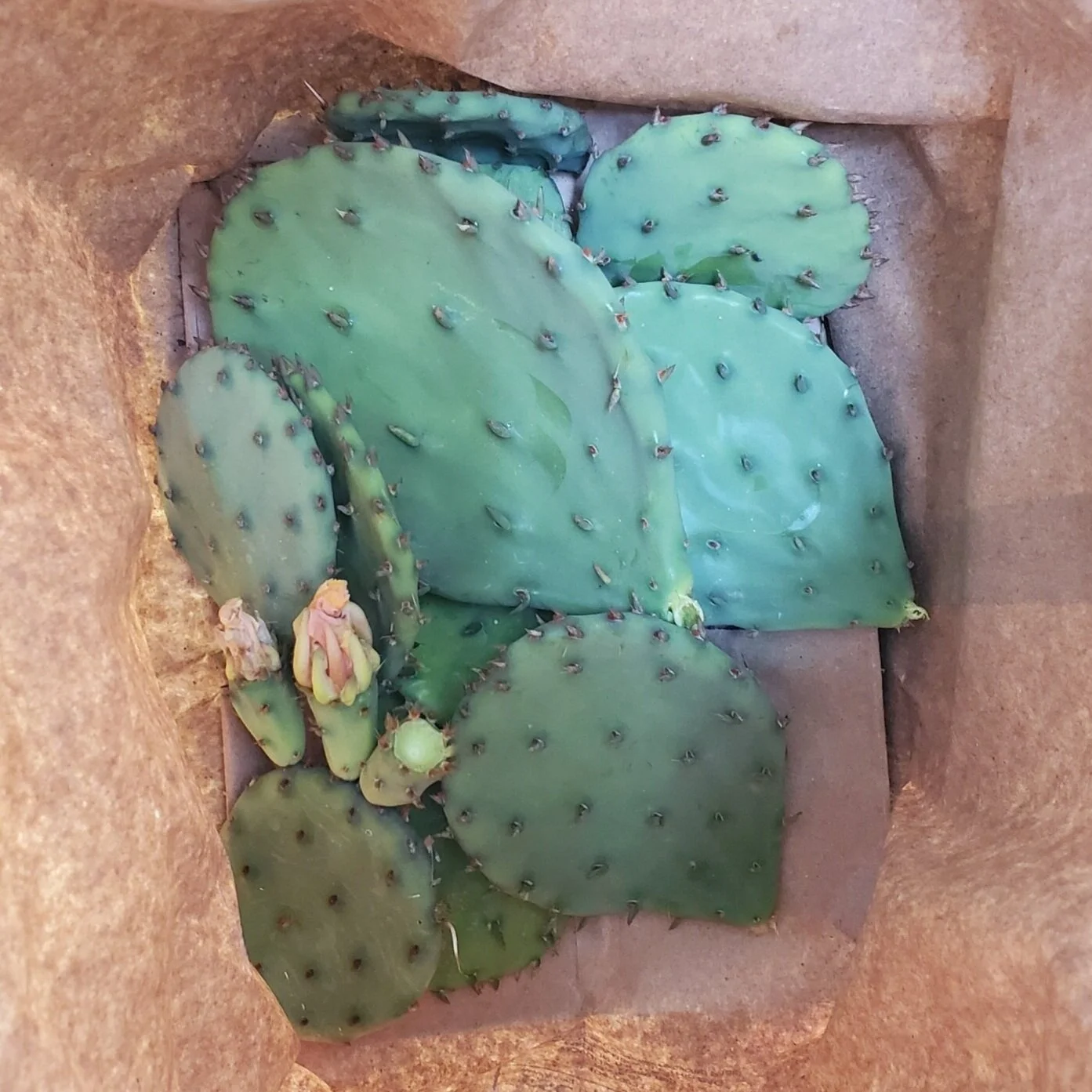
I got all these starts for $20 from a local gardening group.
In addition to all of these exciting plants, I got some starts of our native cactus - the prickly pear! I’ve wanted to grow some for a couple years now but have struggled with where to put them. In addition to that, they’re not easy to find. Since the orchard is so large, I’ll be be able to put them in an out-of-the-way sunny spot where they can be easily avoided.
In order to protect these investments, I’ve ordered a large water storage container for the back of my Jeep. I like this one because it has a spigot already installed, grooves for anchoring and handles. I’ll be using this for years to come as I plant the lot in phases. Its a solid investment as I don’t have water access at the orchard and hauling around 7 5-gallon buckets filled with water would be a pain in the a**.
In the past we’ve used a pickaxe to remove sod, which is effective but hard work. This time we’ll be renting a sod cutter from Do It Best which ranges from about $45-75 depending on how long you use it. Then we’ll be using a garden auger I got for $10 at Menards to dig the individual holes for the plugs to go in. This is a pro level tip that I picked up from Sean Nolan of Sanctuary Native Landscapes while they were installing a garden in our neighborhood. Churning up all manner of weed seed in the soil is never good so an auger is a perfect tool for planting hundreds of plugs in a fresh bed.
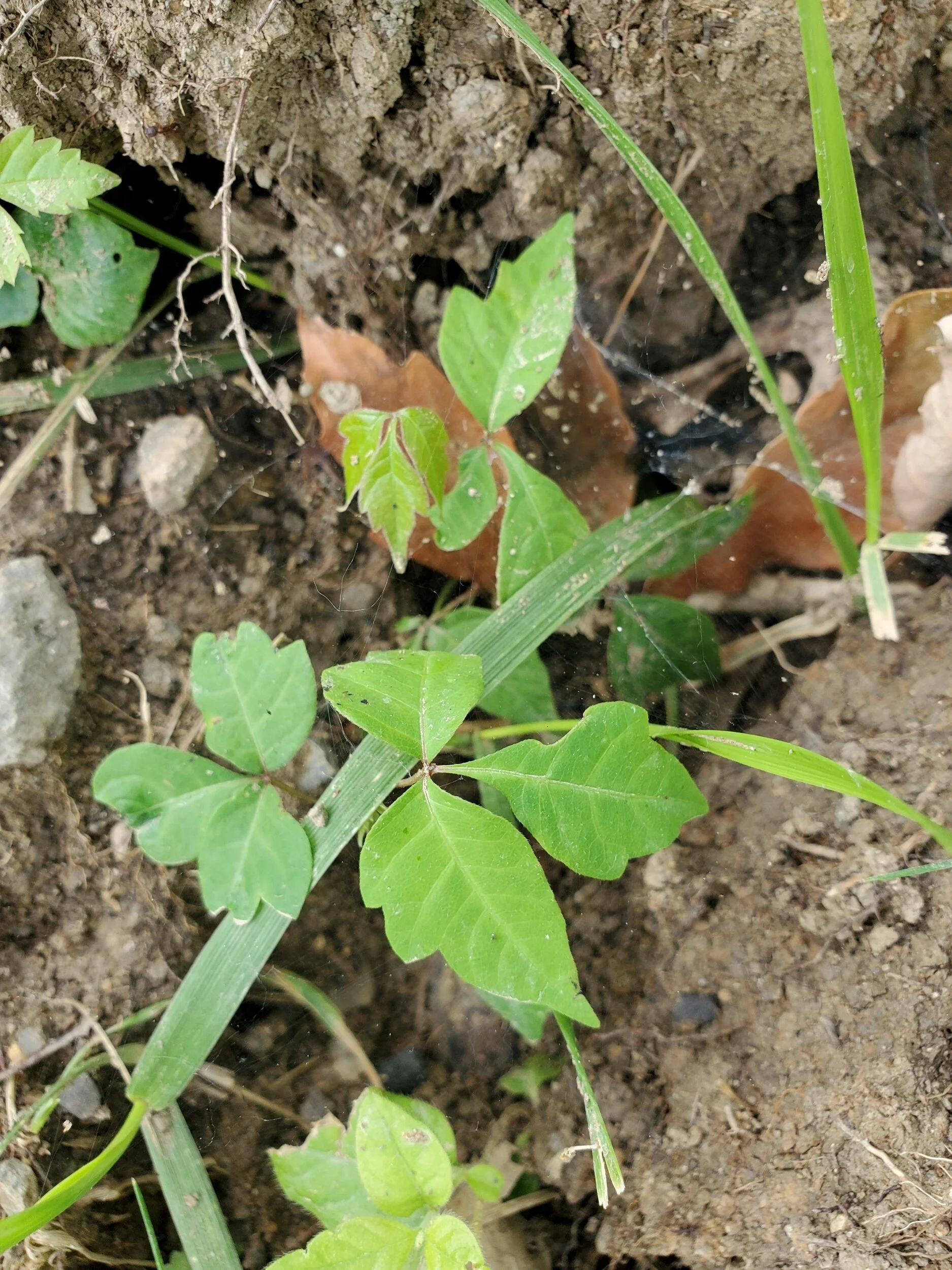
I’ve been around poison ivy so many times and have never had a reaction. I wonder if I’m one of those people who aren’t allergic to it. Hope to never find out, haha.
Among all this good news, is a little bad news. There’s one unwelcome native growing in abundance at the orchard. Poison ivy. Many native plant lovers will allow patches of poison ivy to grow in their landscapes as it does have its benefits. HOWEVER, it’s thriving in the girls favorite spot to play, so it’s gotta go. As far as the other undesirable plants, I’ve got several 3-5” invasive trees/shrubs that I need to cut down and breakdown further - but I’m nearly done! In clearing out the invasive trees and shrubs I’ve been able to identify that I have a mature American Elm and a young hickory tree, both of which are great to have around. I’m already loving the diversity present on the lot.
Another challenge I had was finding an affordable and long lasting way to identify plants. Last Fall I seeded a bed in my front yard and used these plastic garden labels with permanent marker and by Spring all the tags were washed 100% clean. Maddening. Not only will I need the reminders myself, but I want other people (I’m looking at you Larry) to be able to readily identify the plants for years to come. The best I found was using the method in the video below. So I’ll be using these jumbo tags I got from Amazon and 24” insulation supports from Menards. I went with the jumbo tags to make sure I had enough room for the common name, botanical name and planting date. So here’s to hoping that this is an effective solution!
I’m going to leave you with one last tip for this blog post! If you own an urban plot of land or are interested in owning one know that you are eligible for a FREE site visit from an Indiana DNR’s Urban Land Management biologist. I met with Jessica Merkling who works out of Columbia City and is incredibly friendly and knowledgable. In the end she was not able to secure me any funding because my lot is too small (under 1 acre) but she did provide me with this cool sign which I installed on one of my oak trees and this incredible site plan. Jessica was really excited about this project and would love to meet more people interested in doing the same!
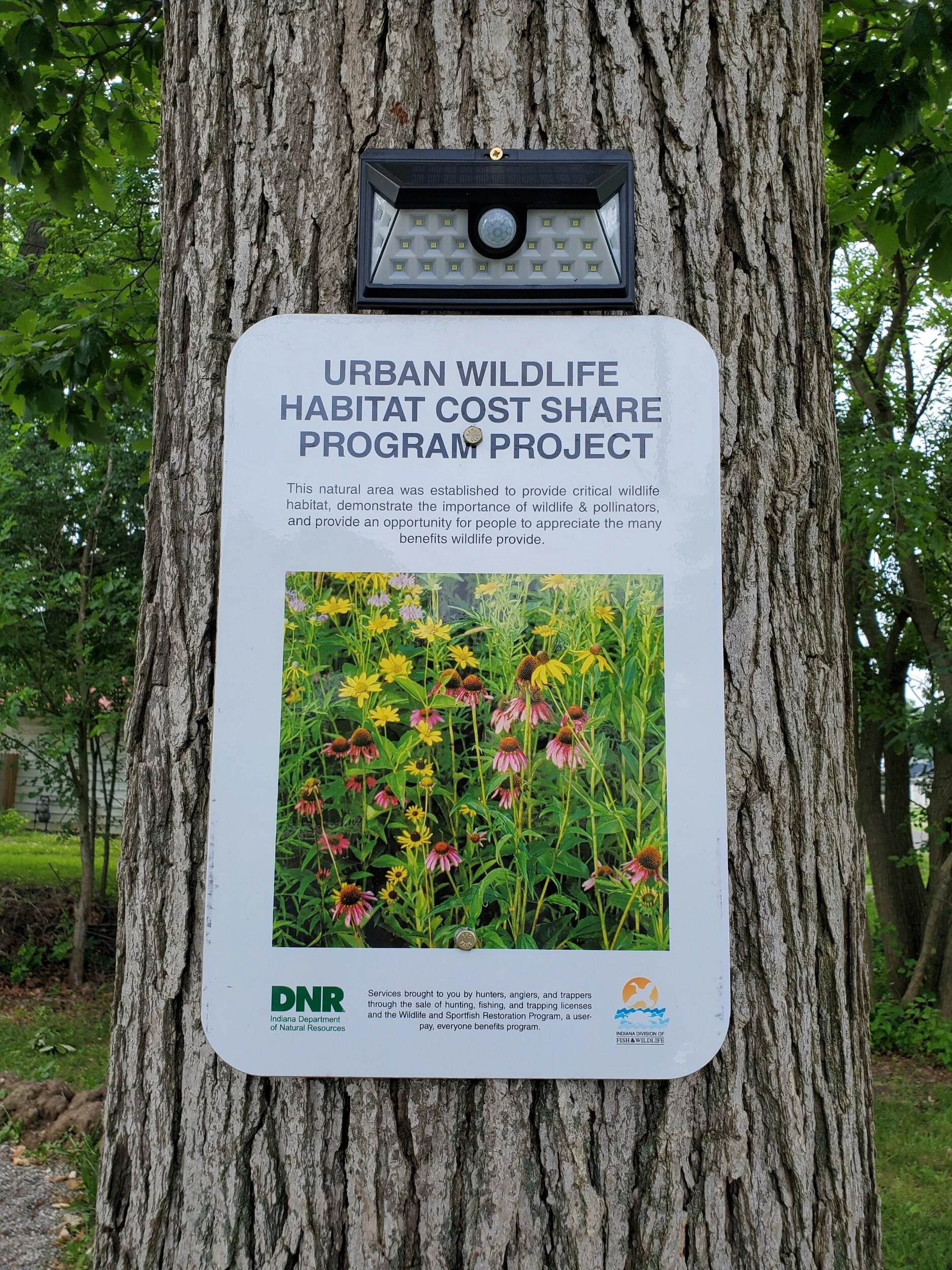
Half the battle of planting a native prairie is getting people on board with how “untidy” they can look. So hopefully all of the maintenance, education, outreach and signage will help with that. Fingers crossed!